Small-satellite constellations and why people keep talking about them
You know that feeling when something’s been around for years, but suddenly everyone treats it like this brand-new revelation? That’s kind of how small-satellite constellations feel. They’ve been humming along quietly for a while, but the past few years flipped a switch and now the whole space scene is buzzing like someone kicked the power back on.
How we even got here
The older approach to space moved slow. Slow in the way that makes you wonder if anything’s happening behind the curtain at all. One giant satellite, one serious budget, one chance to pray the launch behaves. Then smaller teams started experimenting, mostly because the parts stopped costing an arm and a leg and launches weren’t so absurd anymore.
Once a few of those early missions didn’t fall apart, you could see people thinking, hey, maybe there’s something here. Instead of one huge satellite, you throw a handful into orbit and let them cover for each other like a group project that actually works. It felt different, scrappier, lighter on its feet.
What these constellations do for folks down here
People use them for all kinds of things: broadband, daily imagery, climate tracking, mapping ships, watching supply chains, whatever. The specifics change, but there’s a shared idea in all of it. Constant coverage. Not “wait 10 hours for the satellite to reappear,” but “look again in a few minutes.”
Once you get used to that pace, it spoils you. Everything feels more immediate.
The tech underneath that stopped being dull
The small satellites of a decade ago were fragile little boxes you hoped wouldn’t fall asleep on orbit. Now they’ve got smarter sensors, cleaner propulsion, robust radios, and software that doesn’t feel like someone built it in a basement on a panic deadline. You can tell the mindset shifted. People don’t treat them as disposable toys anymore; they run them like real infrastructure.
How many constellations are fighting for space right now
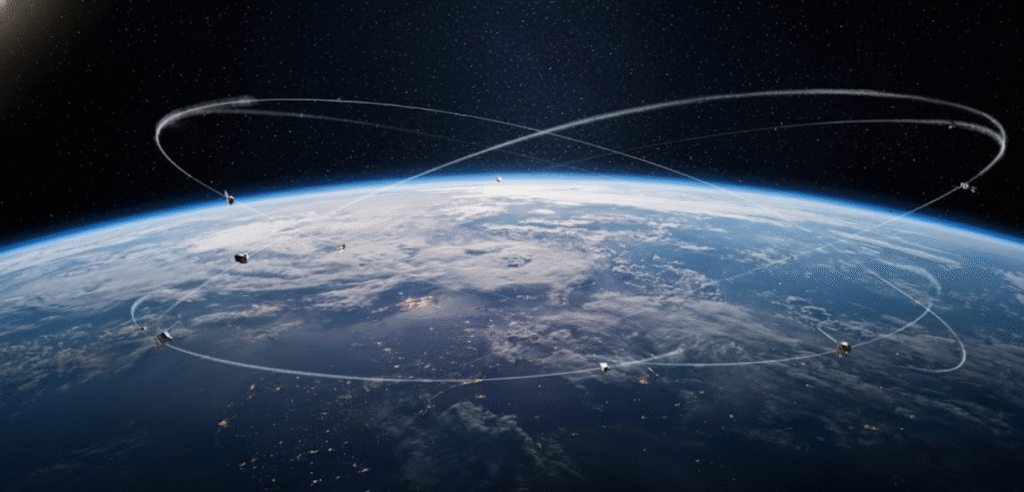
Starlink’s obviously the loud one, like a whole neighborhood of satellites racing across the sky. OneWeb rebuilt itself faster than anybody expected. Kuiper is gearing up with enough funding behind it to shove the market around a bit. And then you have the radar and imaging players doing their own thing, smaller, quieter, but very determined.
Some of these groups only have a couple test satellites up. Others already feel like orbital suburbs forming overhead.
The stuff nobody loves bringing up
People get nervous talking about debris, but it hangs over the whole conversation. Thousands of satellites in low Earth orbit means sometimes something goes wrong, a failed engine, a piece of junk flying where it shouldn’t, a dead unit that refuses to deorbit. Even astronomers get frustrated when bright trails ruin their long-exposure shots.
Regulators try to keep pace, but the sky fills quicker than the rulebooks do. And honestly, nobody’s quite sure what the “too many satellites” line actually is. It’s one of those topics that gets shrugged at until something breaks.
What habits are forming behind the scenes
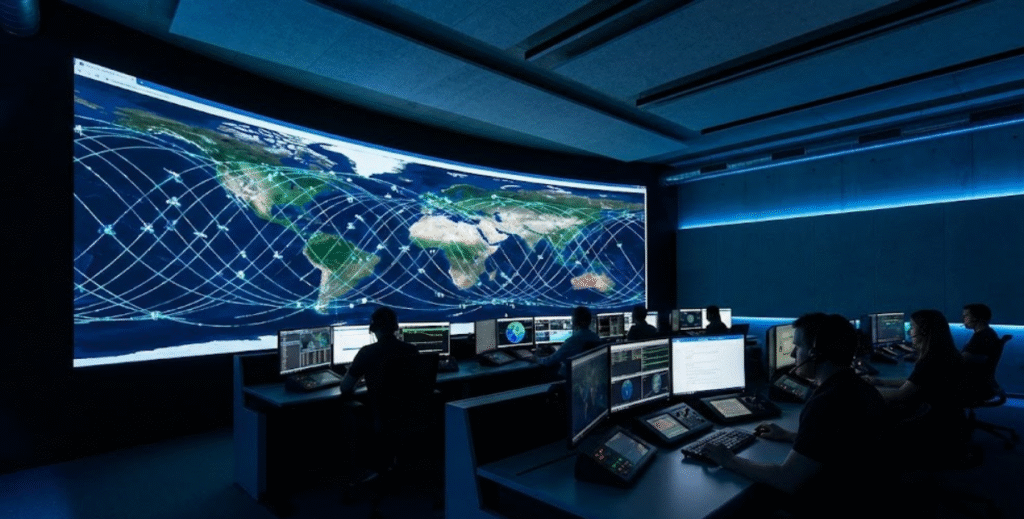
You can see patterns if you listen to folks who work on these networks. They rush prototypes, but then take forever tuning the ground systems. Or they deploy dozens of satellites but spend months adjusting routing so the traffic doesn’t choke. It’s messy in a strangely disciplined way.
Someone once said the whole industry is basically “building the plane while flying it,” and yeah, that’s about right.
Where this might head soon
There’s a good chance we’ll see networks that shift shape on the fly, satellites adapting to real-time demand instead of fixed schedules. And smaller companies might start plugging into the big constellations instead of making their own. Sort of like how phones roam onto other networks without you thinking about it.
Launch providers are scrambling too. Some pushing rapid reusable rockets, some going tiny and frequent, some going huge. Everyone’s guessing where the center of gravity will settle, but honestly, nobody really knows. And that’s kinda the fun part.
The money question that just won’t leave
Building a constellation costs a lot. Maintaining it costs even more. Drop a batch during launch and it’s a rough week or month. Ground stations, licenses, insurance, it adds up fast, and half the spreadsheets never quite match reality. Sometimes teams pivot midway because the market they planned for vanished or bent in a weird direction.
But when a constellation works, it generates this steady, global presence that’s hard to walk away from. People chase that.
Why the next decade feels oddly promising
If you sit around folks in the field long enough, you can hear it in the way they talk. They’re anxious, sure, but also excited in that twitchy, hopeful way. Like they’re watching a whole new layer of infrastructure forming above us, piece by piece, and they know it’s going to shape how the planet functions.
And every now and then you get someone saying something like, “yeah, it’s going fast, but we’ll figure it out, we always does.” And nobody even corrects them because honestly, the vibe’s more important than the grammar in that moment.